
Our Firm’s Favorite Architectural Styles: Because One size shouldn’t Fit All
I’m going to share something a little personal.
A few days ago, I was chatting with an industry colleague at a networking event when they mentioned knowing someone interested in building a new home. When our firm came up in conversation, they showed them our website and portfolio.
The response wasn’t what either of us expected.
After reviewing our portfolio, the client didn’t feel an immediate connection with the architectural styles we had featured online. In short, they felt our recent projects lacked variety.
And I’ll admit, that stung.
As architects, we develop thick skin over time. Design is personal, and not every project will connect with every person. But I’d be lying if I said that comment didn’t stick with me.
When I stepped back and looked at our website through fresh eyes, I realized something: many of the projects we’ve recently photographed and shared do live in a similar architectural world. Warm materials, clean lines, black windows…contemporary mountain-inspired homes. These elements reflect various architectural styles that inspire us and our work. But the comment also highlighted something we’ve probably failed to communicate clearly enough. We are not a one-style firm.
For us, architecture has never been about creating a signature look and applying it repeatedly. The reality is that much of our work begins with listening. Our clients come to us with different goals, different influences, different ways of living, and different ideas about what home should feel like. Our role is to interpret that. In fact, the most rewarding part of what we do is designing homes that reflect our clients, not ourselves.
Some projects naturally move toward modern mountain design. Others lean traditional. This profession isn’t about designing the same home over and over. It’s about helping people discover a design language that feels like theirs.
So this felt like a good opportunity to talk about some of our favorite architectural styles, what sets them apart, and how a portfolio can sometimes tell only part of the story.
What Actually Defines an Architectural Style?
Architectural styles often get simplified into visual categories: contemporary, colonial, craftsman, farmhouse, and so on. But true architectural character goes far deeper than appearances. Each style carries its own relationship to proportion and scale, roof forms, window patterns, detailing, and materiality.
What makes a home feel successful is not simply checking stylistic boxes, but understanding how those elements work together to create a cohesive experience. Even subtle decisions can influence whether a home feels grounded in its architectural language or disconnected from it.
At the same time, architecture is never static. Styles evolve, overlap, and adapt to the people living within them. Part of the design process is understanding which elements should remain rooted in tradition and where there’s room for reinterpretation.
That balance between historical understanding and personal expression is something we value deeply.
The Style We’re Often Known For: Modern Mountain Home
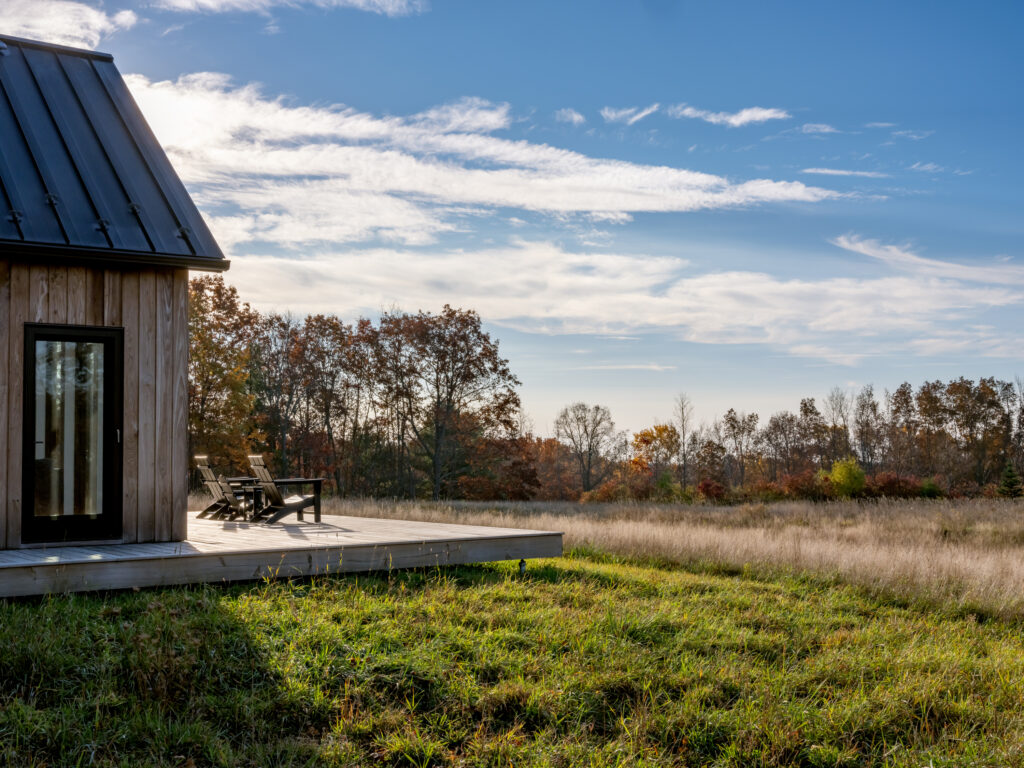
The modern mountain aesthetic has become increasingly popular in the Hudson Valley, and it’s an architectural style many clients come to us requesting. It embraces natural materials, simplicity, and a connection to the outdoors. These homes often feature strong roof forms, exposed structural elements, layered wood, stone, metal, and open floor plans.
We’ve designed many homes that live within this world because it resonates with the way many clients want to live, especially in this region. The style feels relaxed yet elevated. It balances contemporary design with comfort. But designing successful modern homes still requires restraint and detail. Minimal architecture can actually demand more discipline because every proportion, joint, and material transition becomes visible.
Our Interest Extends Far Beyond Contemporary Design
Although modern homes are common in our portfolio, our experience and interests extend across a much broader architectural spectrum. We enjoy the challenge of designing homes rooted in historical traditions and understand the layers of detail that make those homes feel timeless.
While we could go on and on about the nuances that define different architectural styles, we thought it would be more interesting to share a few favorites from within our own team. Each of us is drawn to different forms of architecture for different reasons, and those perspectives ultimately strengthen the way we approach design as a whole.
To start, I’ll share the architectural style I’ve always been most drawn to: the Craftsman home.
CRAFTSMAN HOME
As its name suggests, Craftsman architecture celebrates detail and craftsmanship.
These homes often prioritize:
- Natural materials
- Rich wood detailing
- Built-in elements
- Deep overhangs and brackets
- Layered trim and handcrafted character
Craftsman homes invite closer inspection because much of their beauty lives in the details. The architecture feels warm, personal, and grounded. There’s an honesty to the materials and construction that gives these homes a sense of permanence and authenticity.
Next up is Project Manager Ashley Rubino’s favorite architectural style: Prairie architecture. To be fair, she has a few favorites, but Prairie-style homes stand out.
PRAIRIE ARCHITECTURE
Prairie homes are known for their strong horizontal lines, low-pitched roofs, and connection to the surrounding landscape. Originally popularized by Frank Lloyd Wright and other early 20th-century architects, the style was designed to feel integrated with the land.
Prairie architecture often emphasizes:
- Long horizontal rooflines
- Broad overhangs
- Grouped windows and natural light
- Defined living spaces
- Organic material palettes
What makes Prairie homes so compelling is their balance between discipline and ease. They feel intentional and architectural without feeling overly formal.
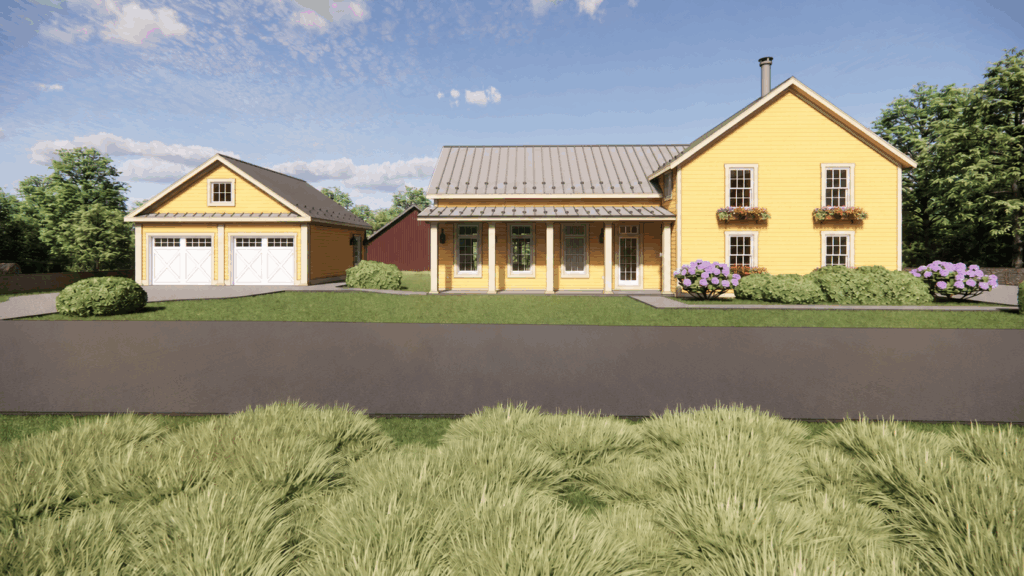
Moving right along, our Interiors and Marketing Manager, Karley Brown, highlights Colonial architecture as her top pick. Colonial homes have evolved into many regional variations over time, including Spanish Colonial, which Architectural Designer Darren Farrell is especially drawn to, and Dutch Colonial homes, which were among the most prevalent architectural styles in the Hudson Valley when the region was first settled. While each variation has its own distinct personality, they also share many foundational principles.
COLONIAL HOMES
Colonial homes carry a sense of order and lasting character. What appears simple at first glance is often carefully composed.
True Colonial design relies on:
- Symmetry and balance
- Traditional window spacing
- Refined proportions
- Classical trim details
- Layered molding profiles
- Intentional roof relationships
Whether it’s a traditional American Colonial, a Spanish Colonial, or a Dutch Colonial, these homes tend to value longevity over trends. Their beauty often comes from restraint, consistency, and proportion rather than excess ornamentation and they share rustic, practical, and functional design ethos.
Architectural Designer Erik Pereyra resonates most with Mid-Century Modern design.
MID-CENTURY MODERN DESIGN
Mid-Century Modern homes embrace simplicity, functionality, and a strong relationship between indoor and outdoor living. The style emerged in the postwar era and continues to influence residential architecture today because of its clarity and timeless appeal.
Key characteristics often include:
- Clean geometric forms
- Large expanses of glass
- Open floor plans
- Minimal ornamentation
- Integration with the outdoors
- Honest use of materials
What makes Mid-Century Modern architecture so enduring is its ability to feel both elevated and livable. The spaces often feel light-filled, efficient, and nature-forward.
Designing for Context Matters
So what’s the takeaway here? Good architecture isn’t about repeating the same design over and over; it’s about understanding architectural language well enough to merge good design with the unique characteristics of those it’s intended for. Because when a house responds to both its owners and its surroundings, it transcends a specific style. It becomes a place that feels right. And that’s what turns a house into a home.
Considering building or reimagining a home? Whether your inspiration leans modern, traditional, historically rooted, or somewhere in between, we’d love to start the conversation. Let’s chat!
